

Showcase 2025: “And then it went horribly wrong!”
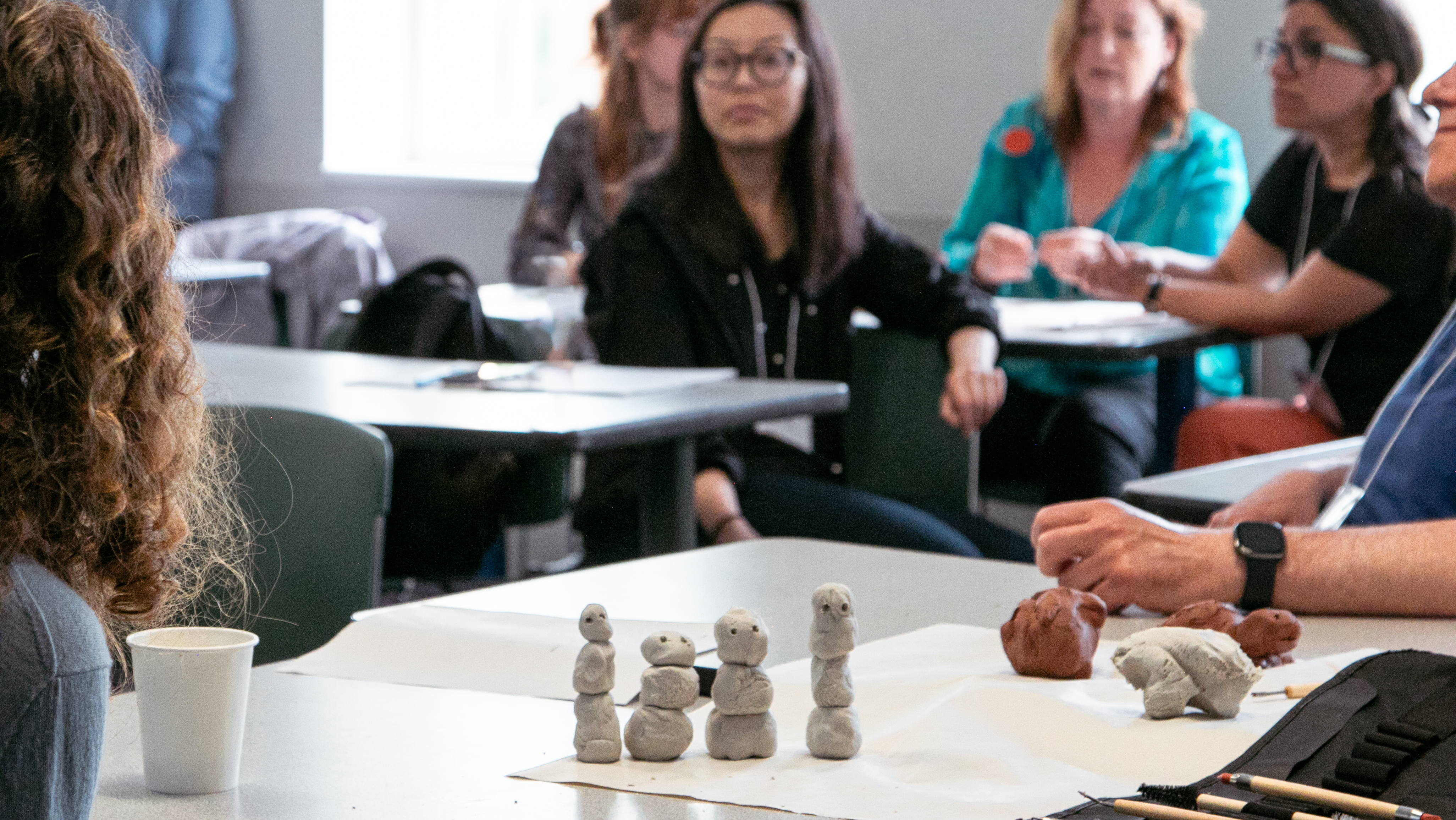
A key lesson in Doug Thomson’s thesis course is that it’s okay when things go wrong.
“One of the things I found over the years of teaching this course is that students get very, very scared about doing research,” said Doug Thomson, a professor of Criminal Justice in the Faculty of Social and Community Services. To combat this, his students engage in experiments designed to make the stress of research manageable and to build community within the classroom.
“[Students] feel overwhelmed or try to take on too much and think that it should be perfect,” said Thomson, adding that research “never, ever, ever goes as planned.”
At Showcase, Thomson and five of his former thesis students demonstrated one of these experiments. Participants were split into three groups and tasked with building as many figures as possible out of clay, with a twist that one group’s figures would be repeatedly destroyed. At first, the team whose figures were crushed got angry and started to build faster, but eventually they got discouraged and quit.
“How many assignments do we give students [that are] like taking their work and just crushing it and putting it back in their lump of clay again,” he said, noting that when students feel a lack of agency over their work, they tend to get frustrated and give up.
“If we allow the students to do work which they see as theirs, they feel much more engaged and willing to participate and more invested in it.”
All video interviews were conducted and edited by Fiona Tudor Price.